Shared Spaces, Shared Responsibilities
Your Freedom. Our Shared Responsibility.
Everyone deserves safe, clean, accessible, and peaceful communities. Responsible citizenship includes respecting other people, following applicable rules, being truthful, and taking responsibility for the spaces and services we share.
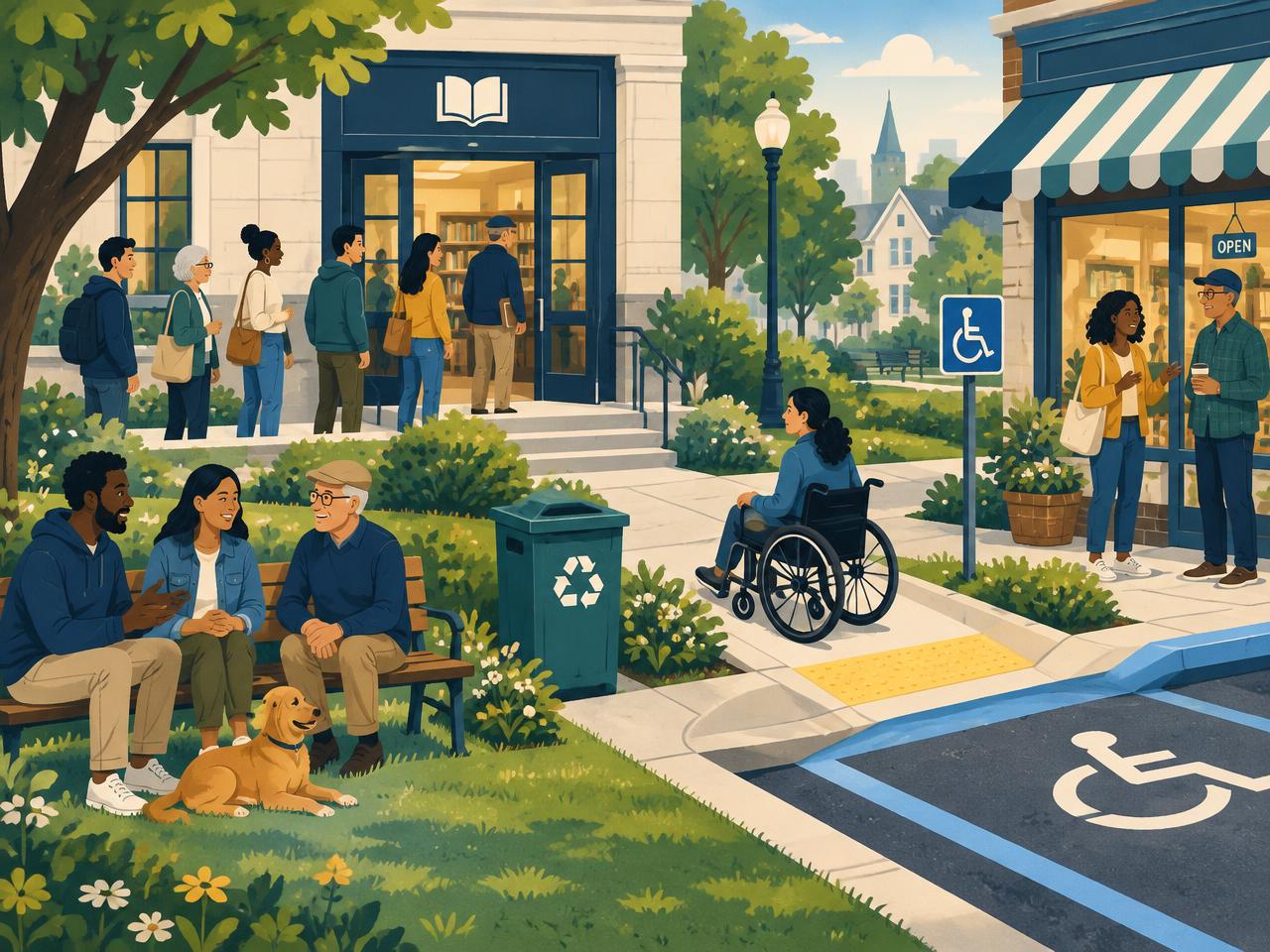
These expectations apply equally to everyone — immigrants, naturalized citizens, native-born citizens, residents, visitors, and businesses.
Cultural traditions and personal convenience do not excuse harming others, blocking access, creating unsafe conditions, or ignoring applicable rules. Unfamiliar customs or celebrations are not automatically misconduct.
How to read the labels
- Courtesy
- A social expectation that helps people share spaces.
- Venue Rule
- A requirement set by the operator of a place or service.
- Legal Requirement
- A requirement verified for the stated jurisdiction.
We use "Legal Requirement" only when we read a current official source, and we show its jurisdiction and the date we checked it. Fines and penalties are not listed here — they vary, so check the responsible agency.
Waiting your turn
Lines and appointment systems are how a place shares limited time fairly. Cutting in doesn't save time overall — it shifts the wait onto everyone behind you and makes people trust the system less.
- Courtesy
Respect lines and appointments
Join at the end of the line or check in for your appointment the way the place asks.
- Don't push ahead or ask a friend near the front to let you in.
- Don't claim an exception you don't have.
- If you need to step away, ask staff whether you can keep your place or how to rejoin.
- Venue Rule
Follow posted priority-access rules
Some places set priority lines — for example, for people with disabilities, older adults, or ticket holders. Follow what the venue posts, and ask staff when you're unsure.
Check your city, state, or venue's current requirements.
- Courtesy
- Venue Rule
Respect legitimate accommodations
Someone may be offered a seat, an earlier spot, or extra help because of a disability or other need. Many disabilities can't be seen. Leave those decisions to staff.
Noise and quiet spaces
Check the setting and adjust. Quiet-space etiquette is mostly courtesy or venue rules; noise limits in neighborhoods are set by local governments and differ from place to place.
- Courtesy
Speakerphone calls and loud videos
In waiting rooms, buses, and shops, use headphones for videos and keep calls short and quiet, or step outside.
- Courtesy
- Venue Rule
Music in public places
Keep music to a level only your group can hear unless the place is set up for it. Follow any posted rules about speakers.
- Venue Rule
- Courtesy
Hospitals, libraries, memorials, places of worship, and performances
Lower your voice, silence your phone, and follow posted rules. These places often set their own quiet and photography rules.
- Courtesy
- Venue Rule
Residential neighborhoods and shared housing
Be mindful of late-night noise through shared walls and in yards. Many cities and housing communities have quiet hours or noise rules, and leases often include them.
Check your city, state, or venue's current requirements.
Cleanliness and public health
Clean shared spaces protect everyone's health. Rules about litter, smoking, pet waste, and dumping are set by states and local governments and differ from place to place.
- Courtesy
Litter and smoking waste
Use appropriate disposal facilities. If none is available, keep ordinary litter with you until you can dispose of it properly. Handle smoking materials safely and follow local disposal guidance.
Check your city, state, or venue's current requirements.
- Courtesy
- Venue Rule
Spitting and public restrooms
Use a tissue or a sink rather than spitting on sidewalks or floors. In shared restrooms, flush, put paper in the bin or toilet as posted, wipe up splashes, and wash your hands.
- Courtesy
- Venue Rule
Pet waste
Pick up after your pet and put the bag in a trash can. Many parks and cities require it — check posted signs.
Check your city, state, or venue's current requirements.
- Courtesy
Household and business waste
Don't leave furniture, bags, or business waste in alleys, lots, or other people's bins. Your city or county's solid-waste department explains bulk pickup, recycling, and drop-off sites.
Check your city, state, or venue's current requirements.
Accessible parking and access
Accessible spaces, access aisles, curb ramps, and clear sidewalks let people with disabilities reach the same places everyone else does. A short stop doesn't justify blocking them.
- Legal Requirement
- Courtesy
Accessible parking spaces exist for a reason
Accessible spaces are for people with qualifying access needs who have the required permit. The striped access aisle next to the space is needed for wheelchairs and lifts — never park in it.
Legal requirement — United States (federal)
ADA.gov says that when state or local governments, businesses, and nonprofits provide parking, they must provide accessible spaces that comply with the ADA, and those spaces must have access aisles.
Source checked October 31, 2026.
ADA.gov: Accessible parking spaces(opens ada.gov in a new tab)- Legal Requirement
Use only your own parking placard
Parking permits for people with disabilities are issued by your state, which sets the rules for using them.
Legal requirement — California
The California DMV says only the person issued a disabled person parking placard may use it, and that lending it, using someone else's, or displaying a counterfeit placard is illegal and may lead to citations and fines.
Source checked October 31, 2026.
California DMV: Disabled person parking placards and plates(opens dmv.ca.gov in a new tab)Check your city, state, or venue's current requirements.
- Courtesy
Keep ramps, entrances, and sidewalks clear
Don't block curb ramps, entrances, or sidewalks with cars, carts, bikes, scooters, signs, or event equipment.
Check your city, state, or venue's current requirements.
- Courtesy
Don't assume or confront
Not every disability is visible. If you believe someone is misusing an accessible space, report it to the property owner or your local non-emergency parking enforcement rather than confronting the person or posting about them.
Celebrations and community events
Weddings, festivals, holidays, block parties, and religious celebrations are part of every community. A little planning keeps them safe and keeps good relations with neighbors.
- Venue Rule
- Courtesy
Event planning checklist
Before a large gathering, especially with amplified sound, fire, or street use:
- Check venue and local requirements.
- Obtain required permissions or permits.
- Plan sound levels and ending times.
- Keep sidewalks, driveways, entrances, and emergency access clear.
- Follow applicable fireworks and fire-safety rules.
- Arrange parking, sanitation, and cleanup.
- Consider neighbors and communicate when appropriate.
- Respect religious and cultural differences.
Check your city, state, or venue's current requirements.
- Courtesy
Fireworks and open flames
Whether consumer fireworks are allowed — and when — depends on your state, county, and city, and can change with fire-danger conditions. Check local rules first, and follow the Consumer Product Safety Commission's safety advice.
Check your city, state, or venue's current requirements.
Honest use of public services
Public programs work when applications are truthful. Mistakes happen; deliberate deception is different. If you made an honest mistake, correcting it with the agency is the right step.
- Legal Requirement
Give truthful information and authentic documents
When you apply for benefits, licenses, or services:
- Provide truthful application information.
- Submit authentic documents.
- Disclose information when the program requires it.
- Don't impersonate others or use someone else's identity.
- Don't misrepresent household, income, residency, disability, or other eligibility facts.
Legal requirement — United States (federal) — Social Security programs
Social Security says fraud exists when a person intentionally gives false information to receive benefits, including making false statements, misrepresenting information, or concealing important facts.
Source checked October 31, 2026.
Social Security: Fraud prevention and reporting(opens ssa.gov in a new tab)- Venue Rule
Correct mistakes through the responsible agency
If you realize information you gave was wrong, contact the agency that runs the program and follow its process to update it. Each program has its own way to report changes.
- Courtesy
Honest mistakes are not fraud
A misunderstanding or good-faith error is different from deliberate deception. Agencies have processes for fixing errors. If you're worried about a past application, consider talking with a qualified legal aid provider.
Responsible small businesses
Accepting cash is legitimate. Cash payments do not remove applicable recordkeeping, tax, licensing, employment, or consumer-protection responsibilities.
- Legal Requirement
Keep records of sales, including cash
Record every sale, keep receipts and expense records, and separate business and personal money where appropriate.
Legal requirement — United States (federal tax)
The IRS says you must keep your records as long as needed to prove the income or deductions on a tax return, and that you should keep documents showing the amounts and sources of your gross receipts — for example, cash register tapes and deposit information.
Source checked October 31, 2026.
IRS: Recordkeeping(opens irs.gov in a new tab)- Courtesy
Business responsibilities checklist
What applies depends on your business, structure, and location. Use this list to find questions to check:
- Record business sales, including cash sales.
- Keep appropriate receipts and expense records.
- Separate business and personal finances where appropriate.
- Check applicable registrations and licenses.
- Understand federal, state, and local tax obligations.
- Check sales-tax requirements for the business and location.
- Follow applicable payroll and worker-classification requirements.
- Provide accurate descriptions, prices, and customer records.
- Seek qualified help when requirements are unclear.
Check your city, state, or venue's current requirements.
- Courtesy
Employees and contractors
Whether a worker is an employee or an independent contractor affects taxes and worker protections. The IRS and the Labor Department explain how to tell the difference.
Check your city, state, or venue's current requirements.
- Courtesy
Treat customers fairly
Describe products and prices accurately and keep customer records you're required to keep. The FTC offers free guidance for small businesses.
Respectful conflict resolution
Most problems can be solved calmly. Your safety comes first.
- Courtesy
Five steps
- Assess whether it is safe to engage.
- Make a calm, specific request when appropriate.
- Ask venue staff, property management, or event organizers for help.
- Use the relevant official non-emergency reporting channel when warranted.
- Use emergency services (911) for immediate emergencies.
- Courtesy
What not to do
Don't threaten, retaliate, trespass, follow people, or shame them in public or online. Don't post photos of people you believe broke a rule — report the situation to the responsible office instead.
Everyday scenarios
Open a situation to see a responsible response. Nothing you click is saved or scored.
Responsible response
Greet your friend, then join the end of the line. If you were truly holding a place together, ask staff whether that's allowed.
Why it matters
Joining a friend up front makes everyone behind them wait longer and feels unfair, even if it's quick.
Rule category
- Courtesy
- Venue Rule
Responsible response
Lower your voice, take speakerphone off, or step outside and finish the call. Follow any posted phone rules.
Why it matters
People in waiting rooms are often anxious or unwell and can't move away from the noise.
Rule category
- Courtesy
- Venue Rule
Responsible response
Keep ordinary litter with you until you find a proper bin. Make sure smoking materials are fully out and dispose of them safely.
Why it matters
Litter spreads, clogs drains, and costs the community money to clean up. Rules differ by place, but carrying it out works everywhere.
Rule category
- Courtesy
Responsible response
Park in a regular space, even if it's farther. Never use an accessible space or its striped aisle without the required permit.
Why it matters
Someone who needs that space may arrive during those two minutes — and without it, they may not be able to get out of their vehicle at all.
Rule category
- Legal Requirement
- Courtesy
Responsible response
Check with your city about permits and sound rules, plan an ending time, let neighbors know ahead of time, and keep driveways and emergency access clear.
Why it matters
Good planning protects the celebration and the neighbors. Requirements vary by city, so check before you set up.
Rule category
- Venue Rule
- Courtesy
Responsible response
Accepting cash is fine. Record each cash sale the same way you record card sales, keep receipts, and check your tax and sales-tax obligations.
Why it matters
Cash doesn't change your recordkeeping or tax responsibilities, and good records protect you if questions come up.
Rule category
- Legal Requirement
Responsible response
Contact the agency that runs the program and follow its process to correct it. Keep a note of when and how you reported the change.
Why it matters
Fixing an honest mistake promptly is the responsible step, and agencies have processes for it.
Rule category
- Venue Rule
Responsible response
If it's safe and appropriate, make a calm request. Otherwise, tell staff or property management, or use your city's non-emergency channel. Call 911 only for an immediate emergency.
Why it matters
Officials can check the facts and apply rules fairly. Confronting, filming, or shaming people can escalate the situation and may hurt someone who did nothing wrong.
Rule category
- Courtesy
My review checklist
Topics reviewed: 0 of 8
This is only a reminder list for your own reflection. It is not a citizenship score, a trustworthiness rating, or a legal compliance certificate, and it doesn't affect eligibility for any government service.
Saved only on this device
Your answers and progress stay in this browser and are not sent to us or to any government agency. Anyone else who uses this browser may be able to see them. Only the topics you check are saved — no other details.
Find local resources
Choose a state, and optionally a city or county, to see official places to check rules and get help.
Your choice is used only on this page and isn't saved. This tool never sends complaints or collects information about other people.
Citizen Navigator provides general educational guidance. Requirements vary by location and setting. Consult the responsible government agency or venue for current rules.