Explore America
Explore America. Understand Its Stories.
Discover places that tell America's stories—from Indigenous cultures and immigration to independence, civil rights, innovation, and natural wonders. Find meaningful destinations for your next family trip.

Find places to visit
Sort by distance (optional)
Your location is used only in this browser tab to sort the list. It isn't saved or sent to us. Distances are straight-line, not driving distance.
48 places

Philadelphia, Pennsylvania
Independence Hall and the Liberty Bell
- Founding, Independence & Government
The Declaration of Independence (1776) and the U.S. Constitution (1787) were both debated and signed in Independence Hall. The Liberty Bell, displayed nearby, became a symbol for abolitionists and, later, for many other movements for freedom.
Operated by: National Park Service (Independence National Historical Park) Federal agency
Photo: Rdsmith4, CC BY-SA 2.5, via Wikimedia Commons

Washington, D.C.
U.S. Capitol
- Founding, Independence & Government
The Capitol is where Congress — the Senate and the House of Representatives — meets to debate and pass federal laws. Its dome is one of the most recognized symbols of representative government.
Operated by: Architect of the Capitol (U.S. Capitol Visitor Center) Federal agency
Photo: Martin Falbisoner, CC BY-SA 3.0, via Wikimedia Commons

Washington, D.C.
National Archives Museum
- Founding, Independence & Government
- Immigration & Becoming American
The original Declaration of Independence, Constitution, and Bill of Rights are displayed together in the Rotunda for the Charters of Freedom. The Archives also keeps records many families use to trace their history, including some immigration and naturalization records.
Operated by: National Archives and Records Administration Federal agency
Photo: David Samuel, CC BY-SA 3.0, via Wikimedia Commons

Washington, D.C.
Washington Monument
- Founding, Independence & Government
This tall marble obelisk honors George Washington, commander of the Continental Army and the first president. A visible change in the stone partway up marks a long pause in construction.
Operated by: National Park Service (National Mall and Memorial Parks) Federal agency
Photo: Greyfiveys, CC BY-SA 4.0, via Wikimedia Commons

Washington, D.C.
Lincoln Memorial
- Founding, Independence & Government
- Civil Rights & Social Change
The memorial honors Abraham Lincoln, who led the country through the Civil War. The Gettysburg Address and his Second Inaugural Address are carved inside. In 1963, Dr. Martin Luther King Jr. gave his "I Have a Dream" speech from its steps.
Operated by: National Park Service (National Mall and Memorial Parks) Federal agency
Photo: Martin Falbisoner, CC BY-SA 3.0, via Wikimedia Commons

Boston, Massachusetts
Boston National Historical Park and the Freedom Trail
- Founding, Independence & Government
Boston was a center of the protests and early battles of the American Revolution. A red line on the sidewalk connects meeting halls, churches, burial grounds, and battle sites from that era.
Operated by: National Park Service (Boston National Historical Park) Federal agency
Photo: Infrogmation of New Orleans, CC BY 2.5, via Wikimedia Commons

Charlottesville, Virginia
Thomas Jefferson's Monticello
- Founding, Independence & Government
- Arts, Architecture & Regional Culture
Monticello was the home and plantation of Thomas Jefferson, author of the Declaration of Independence and third president. Jefferson designed the house himself.
Operated by: Thomas Jefferson Foundation Nonprofit organization
Photo: Moofpocket (assumed by Wikimedia Commons), CC BY 2.5, via Wikimedia Commons
New York Harbor (New York and New Jersey)
Statue of Liberty and Ellis Island
- Immigration & Becoming American
- Founding, Independence & Government
The Statue of Liberty, a gift from the people of France dedicated in 1886, became a symbol of welcome for people arriving by sea. Ellis Island was the nation's busiest immigration station from 1892 to 1954; its museum tells the story of American immigration.
Operated by: National Park Service (Statue of Liberty National Monument) Federal agency
Photo: AskALotl, CC0, via Wikimedia Commons
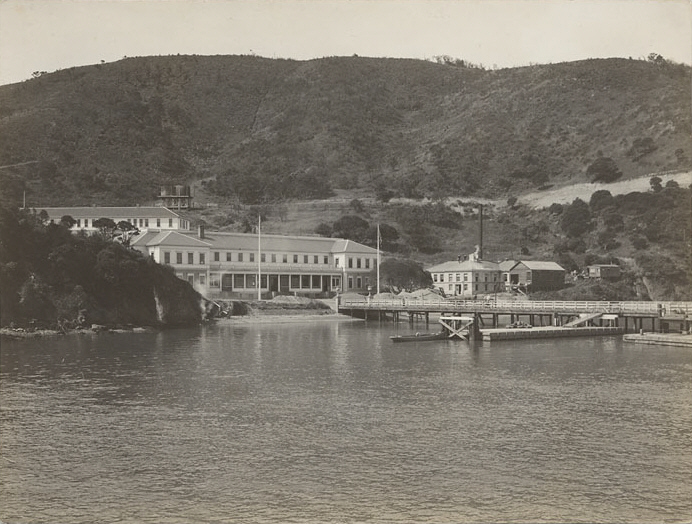
San Francisco Bay, California
Angel Island Immigration Station
- Immigration & Becoming American
From 1910 to 1940, the U.S. Immigration Station on Angel Island processed hundreds of thousands of immigrants, most of them from China because of the Chinese Exclusion Act of 1882. Detained immigrants carved poems into the barracks walls, which can still be seen.
Operated by: California State Parks (Angel Island State Park) State agency
Photo: Hart Hyatt North (historic photograph), Public domain, via Wikimedia Commons
New York, New York
Tenement Museum
- Immigration & Becoming American
- Arts, Architecture & Regional Culture
In two historic apartment buildings on the Lower East Side, guided tours recreate the homes of real immigrant and migrant families who lived there between the 1860s and the 1980s.
Operated by: Tenement Museum (nonprofit) Nonprofit organization

Washington, D.C.
National Museum of American History
- Immigration & Becoming American
- Science, Industry & Innovation
- Arts, Architecture & Regional Culture
The museum collects objects from American life — from the original Star-Spangled Banner flag to inventions, entertainment, and items carried by immigrants.
Operated by: Smithsonian Institution Smithsonian Institution
Photo: Carol M. Highsmith, Public domain, via Wikimedia Commons

Washington, D.C.
National Museum of the American Indian
- Indigenous History & Living Cultures
The museum presents the histories, arts, and living cultures of Native peoples across the Western Hemisphere, often in their own words.
Operated by: Smithsonian Institution Smithsonian Institution
Photo: Carol M. Highsmith, Public domain, via Wikimedia Commons

Southwestern Colorado
Mesa Verde National Park
- Indigenous History & Living Cultures
- Nature & National Parks
Mesa Verde protects thousands of archaeological sites, including cliff dwellings built by Ancestral Pueblo people. It is a UNESCO World Heritage Site.
Operated by: National Park Service Federal agency
Photo: Tobi 87, CC BY-SA 4.0, via Wikimedia Commons

Taos, New Mexico
Taos Pueblo
- Indigenous History & Living Cultures
- Arts, Architecture & Regional Culture
Taos Pueblo is a living Native American community with multi-story adobe homes. It became a National Historic Landmark in 1960 and a UNESCO World Heritage Site in 1992.
Operated by: Taos Pueblo (tribal community) Tribal nation
Photo: John Mackenzie Burke, CC BY-SA 4.0, via Wikimedia Commons

Mashantucket, Connecticut
Mashantucket Pequot Museum & Research Center
- Indigenous History & Living Cultures
The museum, owned and run by the Mashantucket Pequot Tribal Nation, tells the story of the Pequot people and other Native peoples of the Northeast, from ancient times to today.
Operated by: Mashantucket Pequot Tribal Nation Tribal nation
Photo: Elliot Schwartz for StudioEIS, CC BY-SA 3.0, via Wikimedia Commons

Atlanta, Georgia
Martin Luther King, Jr. National Historical Park
- Civil Rights & Social Change
The park includes Dr. King's birth home, historic Ebenezer Baptist Church where he preached, and the neighborhood along Auburn Avenue that shaped him.
Operated by: National Park Service Federal agency
Photo: Schatzim, CC BY-SA 4.0, via Wikimedia Commons

Birmingham, Alabama
Birmingham Civil Rights National Monument
- Civil Rights & Social Change
In 1963, Birmingham was the center of a campaign against segregation. Images of police using dogs and fire hoses on young marchers helped build national support for the Civil Rights Act of 1964.
Operated by: National Park Service Federal agency
Photo: Carol M. Highsmith, Public domain, via Wikimedia Commons
Selma to Montgomery, Alabama
Selma to Montgomery National Historic Trail
- Civil Rights & Social Change
The 54-mile trail follows the 1965 marches for voting rights. After marchers were attacked on the Edmund Pettus Bridge on "Bloody Sunday," national outrage helped pass the Voting Rights Act of 1965.
Operated by: National Park Service Federal agency

Memphis, Tennessee
National Civil Rights Museum
- Civil Rights & Social Change
The museum is built around the former Lorraine Motel, where Dr. Martin Luther King Jr. was assassinated in 1968. Its exhibits trace the struggle for civil rights from slavery to today.
Operated by: National Civil Rights Museum (nonprofit) Nonprofit organization
Photo: Antony-22, CC BY-SA 4.0, via Wikimedia Commons

Seneca Falls, New York
Women's Rights National Historical Park
- Civil Rights & Social Change
- Founding, Independence & Government
In 1848, the first women's rights convention met in Seneca Falls' Wesleyan Chapel and adopted the Declaration of Sentiments, modeled on the Declaration of Independence.
Operated by: National Park Service Federal agency
Photo: National Park Service, Public domain, via Wikimedia Commons

Keene, California
César E. Chávez National Monument
- Civil Rights & Social Change
- Immigration & Becoming American
Known as Nuestra Señora Reina de La Paz, this was the home and headquarters of César Chávez and the United Farm Workers. Chávez is buried here.
Operated by: National Park Service Federal agency
Photo: Bobak Ha'Eri, CC BY 3.0, via Wikimedia Commons

New York, New York
Stonewall National Monument
- Civil Rights & Social Change
In June 1969, patrons of the Stonewall Inn and neighborhood residents resisted a police raid. The uprising became a turning point in the movement for LGBTQ+ civil rights.
Operated by: National Park Service Federal agency
Photo: Rhododendrites, CC BY-SA 4.0, via Wikimedia Commons
Arlington, Virginia
Arlington National Cemetery
- Military History & Remembrance
Arlington is a national military cemetery where hundreds of thousands of service members, veterans, and family members are buried. The Tomb of the Unknown Soldier is guarded around the clock.
Operated by: U.S. Army Federal agency

Washington, D.C.
National World War II Memorial
- Military History & Remembrance
The memorial honors the 16 million Americans who served in the armed forces during World War II and the millions who supported the war effort at home. A wall of gold stars remembers those who died.
Operated by: National Park Service (National Mall and Memorial Parks) Federal agency
Photo: Carol M. Highsmith, Public domain, via Wikimedia Commons

Washington, D.C.
Vietnam Veterans Memorial
- Military History & Remembrance
A black granite wall lists the names of more than 58,000 Americans who died or remain missing from the Vietnam War. Its design by Maya Lin, then a college student, has influenced memorials around the world.
Operated by: National Park Service (National Mall and Memorial Parks) Federal agency
Photo: National Park Service, CC BY 2.0, via Wikimedia Commons

Honolulu, Hawaii
Pearl Harbor National Memorial
- Military History & Remembrance
The attack on Pearl Harbor on December 7, 1941, brought the United States into World War II. The USS Arizona Memorial stands over the sunken battleship, where more than 1,100 crew members died.
Operated by: National Park Service Federal agency
Photo: Victor-ny, CC BY-SA 3.0, via Wikimedia Commons

Gettysburg, Pennsylvania
Gettysburg National Military Park
- Military History & Remembrance
- Founding, Independence & Government
The 1863 Battle of Gettysburg was one of the largest and deadliest of the Civil War. Months later, President Lincoln gave the Gettysburg Address at the dedication of the soldiers' cemetery here.
Operated by: National Park Service Federal agency
Photo: David Dugan, CC BY-SA 3.0, via Wikimedia Commons

New York, New York
National September 11 Memorial & Museum
- Military History & Remembrance
The memorial remembers the nearly 3,000 people killed in the September 11, 2001, attacks and the six people killed in the 1993 World Trade Center bombing. Two reflecting pools sit in the footprints of the Twin Towers.
Operated by: National September 11 Memorial & Museum (nonprofit) Nonprofit organization
Photo: Paul Sableman, CC BY 2.0, via Wikimedia Commons

Northern Arizona
Grand Canyon National Park
- Nature & National Parks
- Indigenous History & Living Cultures
Carved by the Colorado River, the Grand Canyon exposes nearly two billion years of the Earth's history in its rock layers. It is a UNESCO World Heritage Site.
Operated by: National Park Service Federal agency
Photo: Murray Foubister, CC BY-SA 2.0, via Wikimedia Commons

Wyoming, Montana, and Idaho
Yellowstone National Park
- Nature & National Parks
Established in 1872, Yellowstone is widely considered the world's first national park. It has more geysers and hot springs than anywhere else on Earth, along with bison, elk, and wolves.
Operated by: National Park Service Federal agency
Photo: Rhododendrites, CC BY-SA 4.0, via Wikimedia Commons

Sierra Nevada, California
Yosemite National Park
- Nature & National Parks
Yosemite is known for granite cliffs like El Capitan and Half Dome, tall waterfalls, and giant sequoia trees. In 1864, President Lincoln signed a law protecting Yosemite Valley — an early step toward national parks.
Operated by: National Park Service Federal agency
Photo: Thomas Wolf, www.foto-tw.de, CC BY-SA 3.0, via Wikimedia Commons

North Carolina and Tennessee
Great Smoky Mountains National Park
- Nature & National Parks
- Arts, Architecture & Regional Culture
The park protects forested Appalachian mountains with remarkable plant and animal diversity. Historic farms, mills, and churches preserve Southern Appalachian mountain culture.
Operated by: National Park Service Federal agency
Photo: AppalachianCentrist, CC BY-SA 4.0, via Wikimedia Commons

South Florida
Everglades National Park
- Nature & National Parks
The Everglades is the largest subtropical wilderness in the United States — a slow-moving "river of grass" home to alligators, manatees, and wading birds.
Operated by: National Park Service Federal agency
Photo: G. Gardner, Everglades National Park (NPS), Public domain, via Wikimedia Commons

Mount Desert Island, Maine
Acadia National Park
- Nature & National Parks
Acadia protects rocky Atlantic coastline, granite mountains, and lakes. Much of its land was donated by private citizens, and its historic carriage roads are popular for walking and biking.
Operated by: National Park Service Federal agency
Photo: Plh1234us, CC BY-SA 3.0, via Wikimedia Commons

Interior Alaska
Denali National Park and Preserve
- Nature & National Parks
The park surrounds Denali, the tallest mountain in North America, and protects six million acres of wild land with grizzly bears, moose, caribou, and wolves.
Operated by: National Park Service Federal agency
Photo: Denali National Park and Preserve (NPS), Public domain, via Wikimedia Commons

Island of Hawaiʻi, Hawaii
Hawaiʻi Volcanoes National Park
- Nature & National Parks
- Indigenous History & Living Cultures
The park protects two of the world's most active volcanoes, Kīlauea and Mauna Loa. It is a UNESCO World Heritage Site and an International Biosphere Reserve.
Operated by: National Park Service Federal agency
Photo: Brocken Inaglory, CC BY-SA 3.0, via Wikimedia Commons

Washington, D.C.
National Air and Space Museum
- Science, Industry & Innovation
The museum on the National Mall displays aircraft and spacecraft that changed history, including the Wright brothers' 1903 Flyer and the Apollo 11 command module.
Operated by: Smithsonian Institution Smithsonian Institution
Photo: ajay_suresh, CC BY 4.0, via Wikimedia Commons
Chantilly, Virginia
Steven F. Udvar-Hazy Center (National Air and Space Museum)
- Science, Industry & Innovation
This huge hangar near Washington Dulles International Airport holds thousands of aviation and space artifacts, including the Space Shuttle Discovery.
Operated by: Smithsonian Institution Smithsonian Institution
Merritt Island, Florida
Kennedy Space Center Visitor Complex
- Science, Industry & Innovation
Next to NASA's main launch site, the visitor complex displays rockets and spacecraft, including the Space Shuttle Atlantis. Bus tours enter restricted areas of the spaceport.
Operated by: Delaware North, operating for NASA Private company operating for a federal agency

Houston, Texas
Space Center Houston
- Science, Industry & Innovation
Johnson Space Center is home to NASA's astronaut training and Mission Control. Space Center Houston displays spacecraft and offers tram tours onto the NASA campus.
Operated by: Manned Space Flight Education Foundation (nonprofit) Nonprofit organization
Photo: Shujianyang, CC BY 4.0, via Wikimedia Commons

Dearborn, Michigan
The Henry Ford
- Science, Industry & Innovation
- Civil Rights & Social Change
The Henry Ford includes a museum of American innovation, a historic village, and tours of a Ford truck factory. Its collection includes the bus where Rosa Parks refused to give up her seat in 1955.
Operated by: The Henry Ford (nonprofit) Nonprofit organization
Photo: ajay_suresh, CC BY 2.0, via Wikimedia Commons

San Francisco, California
Golden Gate Bridge
- Science, Industry & Innovation
- Arts, Architecture & Regional Culture
When it opened in 1937, the Golden Gate Bridge had the longest main span of any suspension bridge in the world. Its "International Orange" color makes it one of the most photographed bridges anywhere.
Operated by: Golden Gate Bridge, Highway and Transportation District Local public agency
Photo: Frank Schulenburg, CC BY-SA 4.0, via Wikimedia Commons

Nevada–Arizona border
Hoover Dam
- Science, Industry & Innovation
Built in the 1930s during the Great Depression, Hoover Dam controls the Colorado River and supplies water and electricity to millions of people in the Southwest.
Operated by: Bureau of Reclamation Federal agency
Photo: Mariordo (Mario Roberto Durán Ortiz), CC BY-SA 4.0, via Wikimedia Commons

St. Louis, Missouri
Gateway Arch National Park
- Arts, Architecture & Regional Culture
- Immigration & Becoming American
At 630 feet, the stainless-steel Gateway Arch is the tallest monument in the United States. It commemorates St. Louis's role in westward expansion. The park also includes the Old Courthouse, where the Dred Scott case began.
Operated by: National Park Service Federal agency
Photo: Lewis Hulbert, CC BY-SA 4.0, via Wikimedia Commons

San Antonio, Texas
San Antonio Missions National Historical Park
- Arts, Architecture & Regional Culture
- Indigenous History & Living Cultures
The park protects four Spanish colonial missions — Concepción, San José, San Juan, and Espada — along with historic irrigation ditches and an aqueduct. With the Alamo, they form a UNESCO World Heritage Site.
Operated by: National Park Service Federal agency
Photo: Travis Witt (Liveon001), CC BY-SA 3.0, via Wikimedia Commons

San Antonio, Texas
The Alamo
- Arts, Architecture & Regional Culture
- Military History & Remembrance
Founded as Mission San Antonio de Valero, the Alamo became famous as the site of an 1836 battle in the Texas Revolution. It is a National Historic Landmark and part of a UNESCO World Heritage Site.
Operated by: Texas General Land Office (State of Texas) State agency
Photo: Daniel Schwen, CC BY-SA 4.0, via Wikimedia Commons

New Orleans, Louisiana
New Orleans Jazz National Historical Park
- Arts, Architecture & Regional Culture
New Orleans is widely recognized as the birthplace of jazz, one of America's original art forms. The park shares the city's music history through ranger programs and performances.
Operated by: National Park Service Federal agency
Photo: National Park Service, Public domain, via Wikimedia Commons
Clinton, Oklahoma
Oklahoma Route 66 Museum
- Arts, Architecture & Regional Culture
- Immigration & Becoming American
Route 66, the "Mother Road," connected Chicago and Los Angeles beginning in 1926. This museum traces the highway's history and the people who traveled it.
Operated by: Oklahoma Historical Society (state agency) State agency
Suggested itineraries
3 days · Washington, D.C., and Northern Virginia
Washington, D.C.: Government and national memory
See where Congress meets and where the founding documents are kept, walk the memorials on the National Mall, and spend a day in free Smithsonian museums.
See the plan2 days · New York City and New York Harbor
New York: Immigration and American stories
Follow the immigrant journey from the harbor to the apartments of the Lower East Side, then reflect at two of the city's most important memorials.
See the plan4 days · Pennsylvania and Massachusetts
Philadelphia and Boston: The founding era
Stand where the Declaration and Constitution were signed, then walk Boston's Freedom Trail through the places where the Revolution began.
See the plan4 days · Georgia and Alabama
Atlanta, Birmingham, and Selma: The civil rights movement
Trace the movement from Dr. King's childhood neighborhood to the Birmingham campaign and the march for voting rights.
See the plan3 days · Texas
San Antonio and Houston: Missions and spaceflight
Explore the Spanish colonial missions and the Alamo, then visit the home of NASA's Mission Control.
See the plan2–4 days in one park · Arizona, California, or Wyoming–Montana–Idaho
Western national parks: Choose one
These parks are huge and far apart. Pick one and give it time, rather than trying to see them all in one trip.
See the plan
Know before you go
Check hours, reservations, and closures
Hours, timed-entry rules, and closures change often — sometimes the same day. Check the operator's official website and alerts page right before you go.
Book through authorized channels
Buy tickets and reservations only from the operator or the seller it names. Popular sites attract resellers and scammers — for example, the NPS warns that only Statue City Cruises is authorized to sell Statue of Liberty ferry tickets.
Understand U.S. distances
The United States is very large. Places that look close on a map can be hours apart by car. Distances on this site are straight-line estimates, not driving distances — use a maps service for real routes and travel times.
Weather, heat, altitude, and park conditions
Desert heat, mountain altitude, sudden storms, and snow can be dangerous. Bring water, layers, and sun protection, and check park conditions before setting out.
Plan for accessibility
Many sites offer accessible routes, wheelchairs, captioning, or audio description. Each operator lists what is available. U.S. citizens and permanent residents with a permanent disability may qualify for the free NPS Access Pass — check the requirements.
Respect memorials and sacred sites
Memorials and cemeteries are places of mourning. Speak quietly, dress modestly, and follow posted rules. Churches, mission parishes, and tribal sites are active places of worship and community life.
Follow tribal visitor rules
Tribal nations set their own rules for visitors, including photography limits and closures for ceremonies. Ask before photographing people, and follow the guidance of the tribal authority.
Wildlife safety and Leave No Trace
Never feed or approach wild animals; give bears, bison, elk, and alligators plenty of space. Stay on trails, pack out your trash, and leave what you find.
About park passes
The NPS sells annual passes, with separate options for U.S. citizens and residents and for non-U.S. residents. Passes cover entrance fees at many federal sites but not everything — for example, the NPS says they do not cover the Statue of Liberty ferry, parking, or special tours. Check current eligibility and benefits on the official passes page.
More travel and recreation links are in the Official Resources directory.
Citizen Navigator is an independent educational resource. Visitor access and conditions change. Confirm current details with the destination's official operator.